

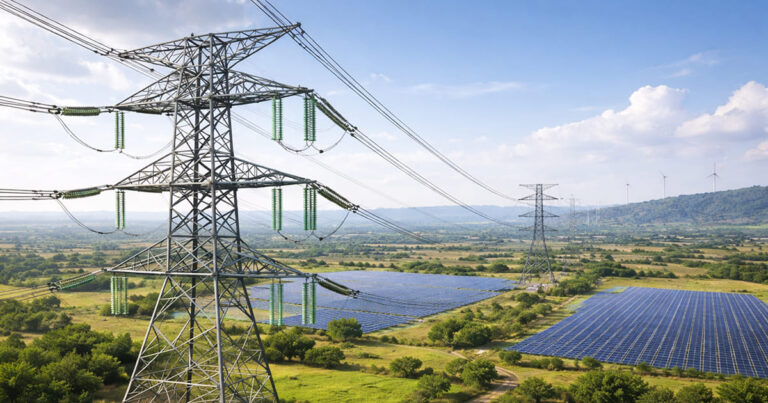
India operates one of the world’s largest synchronized power grids, a technical achievement known as “One Nation, One Grid” that connects all five regional networks into a single synchronous system. As of April 2025, this massive infrastructure comprises 494,732 circuit- kilometers of high-voltage transmission lines operating at 220 kV or above, supported by 1.351 million MVA of substation transformation capacity. The scale of this network reflects decades of investment and engineering expertise, positioning India as a leader in power system management among developing nations.
However, beneath this impressive facade lies a troubling paradox that threatens to derail India’s clean energy ambitions. While physical transmission congestion has virtually disappeared over the past decade, falling from 16% of Power Exchange trades being constrained in 2013-14 to just 0.06% by 2020-21, the actual expansion of transmission infrastructure has stalled precisely when renewable energy deployment is accelerating at an unprecedented pace. This mismatch between generation growth and evacuation capacity has left nearly 50 gigawatts of renewable projects stranded, unable to deliver their clean electrons to the grid despite being fully constructed and ready to operate.
The crisis manifests in multiple ways: developers who have invested billions in solar and wind farms find themselves unable to secure grid connectivity, state utilities order curtailment of renewable generation during peak production hours because local networks cannot absorb the power, and interstate transmission corridors operate at less than 30% of their rated capacity due to misaligned planning and speculative booking of grid access rights. This situation represents not merely an infrastructure deficit but a fundamental challenge to India’s energy transition strategy and its commitments under international climate agreements.