

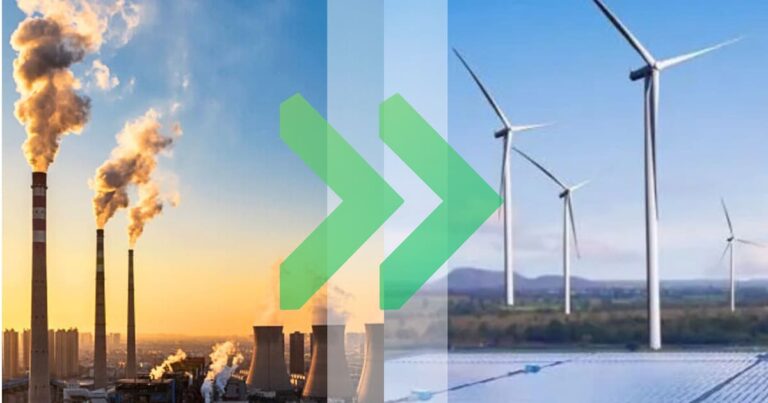
The global energy landscape is undergoing its most profound transformation in a century. As we move through the second half of the 2020s, the transition from fossil fuels to renewable energy sources is accelerating at an unprecedented pace, driven by technological innovation, policy commitments, and economic imperatives. This analysis explores the key trends that will define the energy transition from 2025 to 2030.
The Renewable Energy Surge
Renewable energy capacity is experiencing exponential growth that exceeds even optimistic projections from just a few years ago. Solar and wind power are leading this charge, with solar photovoltaic installations expected to triple between 2025 and 2030. The economics have fundamentally shifted in most markets, new renewable energy is now cheaper than new fossil fuel generation, and increasingly competitive with existing coal and gas plants.
China continues to dominate renewable energy deployment, adding more solar capacity in single years than most countries have installed cumulatively. However, the United States, India, and the European Union are accelerating their own buildouts, driven by policy support including the U.S. Inflation Reduction Act and the EU’s Green Deal. Emerging economies across Southeast Asia, Latin America, and Africa are also joining the renewable revolution, often leapfrogging traditional energy infrastructure entirely.
Offshore wind is emerging as a particular bright spot, with floating wind technology opening up deeper waters and expanding the global resource potential dramatically. By 2030, offshore wind capacity is projected to increase fivefold from 2024 levels, with major developments in the North Sea, Asia-Pacific region, and along the U.S. East Coast.
The Storage Revolution
Perhaps no technology is more critical to the energy transition than battery storage. The period from 2025 to 2030 represents a pivotal phase where storage costs continue to decline while deployment scales exponentially. Lithium-ion batteries remain dominant, but diversification is underway with sodium-ion, solid-state, and flow battery technologies gaining market share for specific applications.
Grid-scale battery storage is solving the intermittency challenge that has long plagued renewable energy. By 2030, many grids will routinely operate with renewable energy penetration exceeding 70% during peak production hours, supported by multi-hour storage systems. California, Texas, Australia, and Germany are pioneering these high-renewable grids, providing blueprints for other regions.
Beyond lithium-based systems, long-duration energy storage solutions including pumped hydro, compressed air, thermal storage, and green hydrogen are emerging to provide seasonal storage and multi-day backup capacity. These technologies will become increasingly important as grids push toward 100% renewable energy targets.
Electrification Across Sectors
The energy transition extends far beyond electricity generation. Transportation electrification is accelerating rapidly, with electric vehicles projected to represent 50-60% of new car sales globally by 2030. China leads with the highest adoption rates, while Europe and North America are rapidly catching up through a combination of regulatory mandates, purchase incentives, and expanding charging infrastructure.
Heavy-duty transportation presents greater challenges, but progress is visible. Electric buses are becoming standard in many cities, while electric trucks are beginning commercial deployments for shorter routes. For long-haul trucking, shipping, and aviation, hydrogen and synthetic fuels derived from renewable electricity are emerging as the leading decarbonization pathways.
Building electrification is another critical frontier. Heat pumps are replacing gas furnaces and boilers across cold climates, while electric cooking is displacing gas stoves. By 2030, new construction in many markets will be predominantly all-electric, while retrofit programs are gradually transforming existing building stock.
Industrial electrification and process heat decarbonization represent the final major frontier. While some industries like aluminum and chemical production are advancing electric alternatives, others including steel and cement are pursuing hybrid approaches combining electrification, hydrogen, and carbon capture technologies.
Hydrogen Economy Emergence
Green hydrogen—produced through renewable electricity-powered electrolysis—is transitioning from laboratory curiosity to industrial reality. While still more expensive than fossil-fuel-derived hydrogen, costs are falling rapidly as electrolyzer manufacturing scales up and renewable electricity becomes cheaper and more abundant.
By 2030, green hydrogen is expected to achieve cost parity with conventional hydrogen in several markets, particularly where low-cost renewable electricity is plentiful. Major hydrogen hubs are developing in Australia, the Middle East, North Africa, Chile, and Patagonia, with pipeline and shipping infrastructure emerging to transport hydrogen to demand centers in Europe and Asia.
Applications are diversifying beyond traditional hydrogen uses in refineries and ammonia production. Steel manufacturers are piloting hydrogen-based direct reduction processes, while hydrogen is being blended into natural gas networks and used for seasonal energy storage. Fuel cells for heavy transportation are gaining traction, particularly in China and South Korea.
Grid Modernization and Digitalization
The energy transition requires not just new generation sources but fundamentally reimagined grid infrastructure. Transmission and distribution networks designed for centralized fossil fuel plants must evolve to accommodate distributed renewable generation, bidirectional power flows, and millions of grid-connected batteries in electric vehicles and buildings.
Investment in grid infrastructure is accelerating, though not yet at the pace required. High-voltage transmission lines connecting renewable-rich regions to load centers are under development globally, including massive projects in China, India, and the United States. Distribution grids are becoming smarter through sensor deployment, advanced metering, and automated control systems.
Virtual power plants aggregating thousands of distributed energy resources including rooftop solar, batteries, and flexible loads are demonstrating the potential of software-defined energy systems. By 2030, these platforms will manage significant portions of grid capacity in leading markets, optimizing renewable integration and improving reliability while reducing costs.
Artificial intelligence and machine learning are becoming integral to grid operations, enabling real-time forecasting of renewable generation, predictive maintenance, demand management, and optimized dispatch. These digital technologies are essential for managing the complexity of highly renewable, highly distributed energy systems.
Policy and Finance Alignment
The energy transition is as much a policy and financial transformation as a technological one. Government policies are strengthening globally, with carbon pricing expanding, fossil fuel subsidies declining, and clean energy mandates proliferating. The European Union’s Carbon Border Adjustment Mechanism represents a new frontier in climate policy, creating trade implications that will influence global industrial decarbonization.
Financial markets are increasingly treating climate risk as financial risk, with trillions in capital being redirected toward clean energy investments. Banks, pension funds, and insurers are divesting from fossil fuels while dramatically scaling clean energy financing. Green bonds, sustainability-linked loans, and climate-focused investment funds are becoming mainstream financial instruments.
Development finance is playing a crucial role in emerging economies, where the energy transition must occur alongside development and poverty alleviation. Multilateral development banks are refocusing portfolios toward renewable energy, grid modernization, and just transition programs that support workers and communities affected by fossil fuel phase-outs.
Regional Divergence and Just Transition Challenges
While the global trajectory is clear, regional differences remain profound. The European Union is advancing the fastest among major economies, with ambitious 2030 renewable targets and substantial fossil fuel reductions already achieved. China’s trajectory will largely determine global success its massive renewable buildout continues, but coal power plants are still being constructed, creating uncertainty about peak emissions timing.
The United States presents a mixed picture, with states like California, New York, and Texas driving aggressive renewable deployment while fossil fuel interests remain politically powerful in many regions. India faces the dual challenge of rapidly expanding energy access while transitioning away from coal, though its renewable ambitions are increasingly bold.
Fossil fuel-dependent economies face difficult transitions. Petrostates from the Persian Gulf to West Africa must diversify economies built on hydrocarbon exports, while coal-dependent regions from Appalachia to Silesia require comprehensive just transition programs to support affected workers and communities.
Developing economies, particularly in Africa, face the challenge of expanding energy access over 600 million people still lack electricity while building clean energy systems from the start. Declining renewable costs create opportunities to leapfrog fossil fuel infrastructure, but financing constraints and technical capacity gaps remain significant barriers.
Outlook: Acceleration Ahead
The 2025-2030 period will likely be remembered as the decisive phase when the energy transition became irreversible. Renewable energy will firmly establish economic and operational superiority over fossil fuels in most applications. Storage technologies will mature from supporting roles to core grid infrastructure. Electrification will expand from early-adopter niches to mass markets across transportation, buildings, and industry.
Challenges remain formidable: grid infrastructure must be built at unprecedented speeds, supply chains for critical minerals must expand sustainably, and political resistance from entrenched interests must be overcome. Success is not guaranteed, and the pace of transition will determine whether the world can limit warming to relatively safe levels.
Yet the momentum is undeniable. The energy transition is being driven not primarily by environmental concerns, though these remain vital, but by hard economics and technological superiority. By 2030, the question will no longer be whether the energy transition will happen, but how quickly it can be completed.